Scale

From a Raspberry Pi to a supercomputer.

One platform, the full range. The same Eldric installs on an edge box and on a multi-GPU datacenter cluster — you add nodes, not new products. Here's what that buys you at the top of the range.


01 — One platform, full scale

Edge to datacenter, same binary.

The platform that runs on a Raspberry Pi is the platform that runs on a rack of GPUs — only the activated modules differ. Start small, grow by adding nodes; nothing to re-architect when you scale up.

02 — Multi-GPU

Place models across the cards you have.

On multi-GPU machines Eldric places models for you: a model per card, a large model split across cards, or many small models packed together. Capacity grows with the hardware you add.

03 — Federated learning

Train across sites — data stays local.

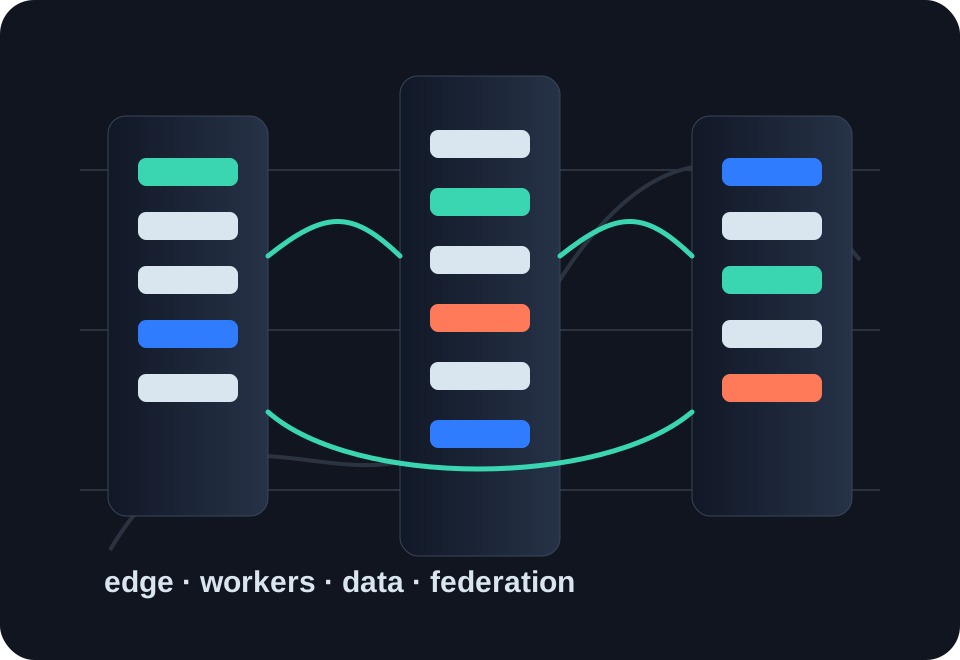
Run training rounds across nodes and sites where each site keeps its own data: the platform coordinates the round and aggregates the result, so a multi-site organisation can improve a shared model without pooling raw data centrally.

04 — Clustering, HA & federation

No single point of failure; many sites, one platform.

Run multiple controllers so the cluster keeps serving if one fails, and federate clusters across sites into one platform — hierarchical or peer mesh. Clustering & HA →

05 — The whole science stack

140+ scientific data sources, on your hardware.

For research and HPC workloads, the platform brings 140+ scientific data APIs and the agent / retrieval / training stack — all on infrastructure you control. For research →

Get started

Size it for your rack.

Hardware-agnostic — CPUs, NVIDIA, AMD, Apple Silicon, ARM. As a datacenter OS · Get started.